Part I: Four Reasons Why Sales is Marketing’s Best Friend
(on deck) Part II: Four Things to Do Right Now to Partner with Sales
Landing my first real job out of college was a common experience; someone I knew got me a job at their firm. In my case, it was my cousin, and his firm was a place where young, untrained—albeit highly enthusiastic and largely naïve—individuals were trained the tactics of financial services sales.
The company marketed and distributed financial products with an army of 20-something sales people and a home office that did everything possible to support them. The owners were exceptionally skilled at molding and shaping all of our sponge minds on all things sales—most importantly, the irrefutable bond between sales and marketing.
Today, marketing teams are armed with a never ending conga line of new technologies designed to sharpen data, create hyper personalized communications, and reach wide audiences instantly. Marketing teams get caught in an endless loop of slicing and dicing audience segments, creating content that’s catchy and engaging, yet also informative and not too wordy, visually impactful yet still within brand guidelines, simple enough to engage with yet sticky enough to capture leads. Throughout the process, it can be easy to overlook the most valuable shaper of content – your sales team.
Regardless of what type of firm you are, if your audience is financial advisors (or the firms they work for), you should be talking to your sales team before creating marketing campaigns and collateral. Here’s why.
1. Sales are your boots-on-the-ground troops
When your sales teams are engaging with firms and advisors, they are as important to your brand as, well, your brand. They are a living and breathing representation of your value prop and they are the most effective way to get your message into the hands of your audience.
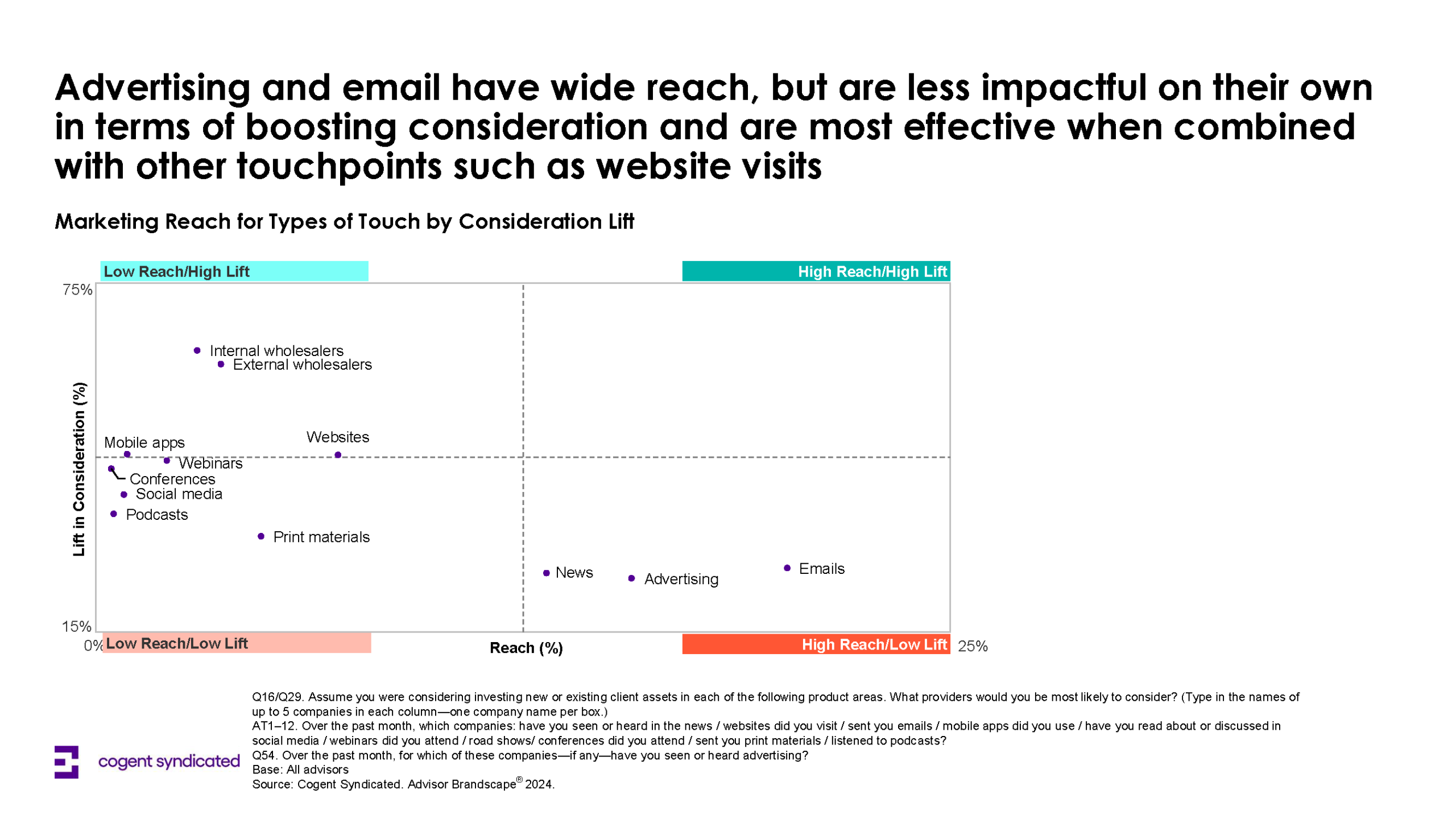
This chart, while somewhat disheartening for marketers, shows the effectiveness of both internal and external wholesales when it comes to effort/reach/lift.
Knowing that advisors view their sales reps as partners means it’s critically important for marketing teams to arm them with the right messaging and the most current information for their conversations.
2. Sales understands how advisors think
To be successful, sales must build and maintain strong relationships with their firms and advisors. Their success depends on it! They learn how advisors think—the pressures they are under, the goals they are working toward, and the challenges they face in serving their clients.
This alignment in thinking enables sales teams to better frame solutions that resonate with the advisor mindset. Ultimately, wholesalers become trusted partners who advisors rely on for product education, solutions, and market trends, making the partnership more impactful.
3. Sales knows which products advisors are using
Sales has firsthand knowledge of the products their advisors use with clients. Through regular conversations, portfolio reviews, and technology that tracks product adoption, sales can gain visibility into where advisors are allocating assets and which solutions resonate most with their clients. They also listen to understand the “why” behind product choices—whether it’s risk management, income generation, product features, or differentiation in client service. Sales can provide highly valuable information to help shape future messaging, positioning, and even product development.
4. Sales hears the real feedback
Sales teams gather real-time feedback from advisors and leverage digital platforms, advisor portals, and CRM tools to capture advisor input in real time, as it happens. Regular branch visits, conference calls, and meetings give sales a chance to ask questions and understand advisor sentiment in the moment. This ongoing feedback loop enables them to quickly understand what’s working, identify challenges, and adjust messaging or product positioning to better align with advisor and client needs.
In short, sales has a direct line to your audience and highly valuable insights into what works and what doesn’t. Marketing teams should not miss the opportunity to tap into their expertise to evolve and refine their efforts.
In part 2, we’ll talk about 4 things marketing teams can do to build an effective partnership with sales.